

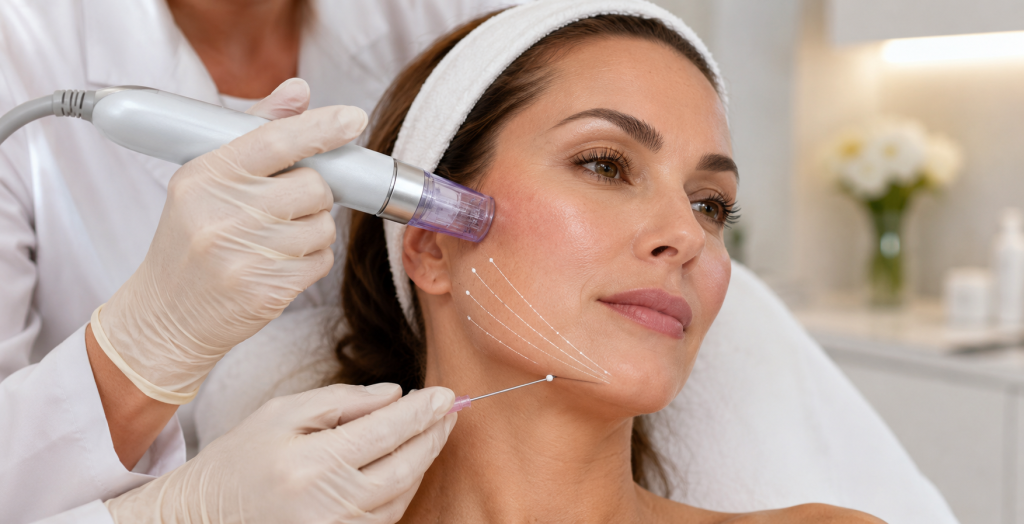
A face can look older for two very different reasons. The skin may show scars, rough patches, or fine lines. Yet the cheeks or jawline may have started to sit lower. Treating only the surface can leave a sag in place. Lifting tissue can leave texture unchanged. Looking Younger Aesthetics helps patients separate these concerns before care begins. Our microneedling skin treatment in Wantagh, NY, targets skin quality, while thread care supports selected loose tissue. This blog explains PDO threads vs RF microneedling through skin layers, facial zones, healing, safety, and treatment goals. It does not treat firmness and lift as equivalent outcomes. Because each concern has a different cause, the better plan starts with a careful facial and skin review.
One Face Can Hold Two Different Concerns
The difference between PDO threads and RF microneedling becomes clear when the provider asks, “What changed?” Texture problems primarily affect the skin. These may include acne scars, visible pores, roughness, or fine lines. Sagging involves tissue position and support. It may show as early jowls, lower cheeks, or a softer jawline. RF microneedling uses small electrodes to deliver heat at chosen depths.
PDO threads use absorbable, barbed sutures for mechanical support. Therefore, skin tightening vs facial lifting is a true treatment difference. One method creates controlled skin injury and heat. The other holds selected tissue through placed sutures. Since one face can have both problems, the main concern should guide the opening step.
A Face Map Makes the Choice Clearer
A useful review examines the area, the cause, and the desired change. RF microneedling vs PDO threads should not be decided by age alone. A patient may have smooth skin with sagging. Another may have a firm outline with acne marks. The question of PDO thread lift vs microneedling needs a zone-based answer.
| Visible concern | RF microneedling focus | PDO thread focus |
| Acne scars or rough texture | Skin response and texture | Not a resurfacing method |
| Fine lines and visible pores | Skin quality and firmness | Limited role |
| Early jowls | May improve firmness | May support selected tissue |
| Soft jawline | May improve skin tone | May create focused support |
| Mixed concerns | Treats the skin layer | Treats tissue position |
That is why PDO threads vs RF microneedling have no single winner. The concern, not the trend, should lead care.
Signs the Skin Surface Needs Care
Skin concerns often show in bright light, close-up photos, or when wearing makeup. They may stay visible while the face is still. In these cases, thread support may not address the main problem. Looking Younger Aesthetics lists RF microneedling among its treatment methods. Its service covers scars, wrinkles, pores, texture, and firmness. Patients considering RF microneedling for skin texture should ask which device will be used.
- RF microneedling for acne scars may fit the marks left after breakouts.
- RF microneedling for wrinkles may address fine surface lines.
- RF microneedling for large pores may support a smoother look.
However, deep folds or lower tissue may need another method. The microneedling skin treatment in Wantagh, NY, can be planned for face or neck concerns.
Signs the Facial Frame Needs Support
Sagging changes the outline of the face. A jawline may look less clear from the side. Cheek tissue may sit lower, while the skin surface still feels smooth. In these cases, PDO threads for sagging skin may be suitable for mild or moderate laxity. ASPS lists early loosening, jowls, sagging brows, and early neck laxity among thread-lift concerns.
- PDO threads for jowls may support tissue near the lower face.
- PDO threads for the jawline may help create a cleaner outline.
- The best treatment for skin laxity depends on tissue weight and skin quality.
Threads do not remove large amounts of extra skin. Therefore, patients need honest limits before care. A PDO thread lift in Wantagh, NY, includes a facial review and planned placement.
What Each Method Can and Cannot Change
People often search for RF microneedling for sagging skin because firmness and lift seem equal. Yet firmer skin can still sit lower. RF energy may support tissue contraction and collagen change. It does not hold tissue with sutures. Threads may provide mechanical support, but they do not resurface scars or reduce visible pores. For that reason, thread lift vs RF microneedling should focus on the source of change.
The RF microneedling results timeline is gradual because the skin needs time to heal and respond. The practice notes that changes may begin within a week, while collagen activity continues. Thread support may appear earlier, although swelling can affect the opening view. Results depend on the device, settings, thread type, skin, tissue weight, and healing.
Compare Recovery Through Real Symptoms
The phrase RF microneedling vs PDO threads recovery can hide useful details. RF care may cause redness, warmth, swelling, dryness, or sensitivity. Thread care may cause swelling, bruising, tightness, tenderness, or irritation at the entry point. These patterns affect work, exercise, makeup, and social plans in different ways.
The FDA notes that microneedling side effects can be short- or long-term. Many appear soon after care and resolve. ASPS notes that thread recovery may involve cold compresses, ointment, medicine, and follow-up. However, neither treatment should be sold as having no downtime. Personal instructions should guide skin care, facial pressure, sun exposure, and activity. Patients should report severe pain, signs of infection, changes in skin color, or unusual weakness without delay.
Safety, Cost, and a Staged Plan
RF microneedling is a medical procedure. In October 2025, the FDA reported serious problems with certain uses. Reported events included burns, scarring, fat loss, nerve damage, and disfigurement. The FDA advises patients to choose licensed providers who are trained in devices.
The RF microneedling vs PDO threads cost question needs a full plan. RF pricing may be based on area, device, settings, and the number of visits. Thread pricing may reflect the facial zone, placement plan, and follow-up. A cheaper treatment may not address the right problem.
People may ask if RF microneedling and PDO threads can be combined. A staged plan may fit mixed concerns—however, healing and timing matter. Separate visits can help the provider assess each result before providing further care.
Questions That Protect the Treatment Plan
Looking Younger Aesthetics reviews skin, facial movement, health history, past care, and goals. Our provider can explain whether the concern lies at the surface, in the tissue position, or in both. Patients researching PDO threads in Wantagh, NY, can use the thread service guide before booking. Dr. Mahalia Previlus is an MD, internist, aesthetic injector, owner, founder, and medical director. She completed an internal medicine residency in 2011.
- Ask which device, thread, depth, or placement plan will be used.
- Ask why that method fits the visible concern.
- Ask which symptoms need fast medical care.
- Ask how follow-up and problem care are handled.
- Ask what the treatment cannot change.
Clear answers support informed consent and realistic goals.
Match the Method to the Visible Change
A good plan should answer one simple question. Is the main concern skin quality, tissue position, or both? PDO threads vs RF microneedling compares physical support with energy-based skin care. RF treatment may fit scars, pores, fine lines, or firmness. Threads may fit selected jowls or a softer outline. Looking Younger Aesthetics offers microneedling skin treatment in Wantagh, NY, and thread consultations. We review the full face before suggesting care. This helps patients avoid treating the wrong layer or expecting one method to solve every concern. A clear plan can reduce wasted visits and support more realistic goals from the start. To schedule a visit, call (631) 651-6203. The office is at 3430 Sunrise Highway, Wantagh, NY 11793.
Frequently Asked Questions
Which option may help with rough skin and old acne marks?
Energy-based needling may fit scars, roughness, and fine surface lines. Threads do not resurface the skin. However, scar depth, skin tone, healing history, and device settings matter. A licensed provider should review the skin before choosing treatment depth, session count, or aftercare needs for that area.
Which option may help a softer lower face?
Threads may support selected tissue when mild or moderate laxity affects the jawline. Energy-based care may improve firmness, yet it does not hold tissue with sutures. Bone shape, facial fat, lost volume, muscle pull, and skin quality can change the safest treatment plan for each face.
Can one procedure improve both firmness and facial shape?
One treatment may address more than one concern, but it may not fully resolve both. Skin firmness and tissue position are different. A provider should determine whether the main issue lies in the skin, deeper tissues, facial fat, or lost volume before planning safe care.
Which choice may show more visible healing?
Threads may cause bruising, swelling, tightness, or tender entry points. Energy-based needling may cause redness, warmth, dryness, or swelling. The visible recovery depends on treatment strength, area, skin response, and aftercare. Patients should plan around work, travel, exercise, and important events during the early healing period.
What should patients ask before booking?
Patients should ask who will perform the treatment, which device or thread will be used, and why it is appropriate for the concern. They should review risks, recovery, aftercare, expected visits, and follow-up access. Clear answers matter more than a low price, a popular name, or a single social media result.
Where can patients compare these options in Wantagh?
Looking Younger Aesthetics is located at 3430 Sunrise Highway in Wantagh. The provider can review texture, scars, tissue position, health history, and goals. Patients may call 631-651-6203 to ask about available methods, preparation, recovery, and appointment options before choosing a personal care plan with confidence.
Can Long Island patients discuss texture and jawline concerns together?
Yes. One visit can review both concerns. However, the care plan may use separate methods or dates. The provider should explain which issue needs skin treatment, tissue support, volume care, or another option. This keeps each step tied to a clear reason, schedule, and goal.