
A less defined jawline can change how a face looks from every angle. However, patients may not know whether the cause is loose tissue or weaker skin support. Online claims can make that choice harder. Some posts promise a fast lift, while others promote slow collagen growth. Looking Younger Aesthetics offers a PDO thread lift in Wantagh, NY, after reviewing facial shape, movement, health history, and goals. HIFU is covered here for education. The practice has not confirmed that it offers this device.
This blog compares PDO threads vs HIFU without calling either one a replacement for surgery. Threads can hold selected tissue. Focused ultrasound uses energy to create a gradual tissue response. Therefore, the better choice depends on the face, the desired pace, and the amount of laxity.
Why the Device Name Matters
HIFU means high-intensity focused ultrasound. However, it can cover different systems, settings, depths, and approved uses. HIFU facial care may not follow one standard process at every practice. Therefore, patients should ask for the exact device name before treatment.
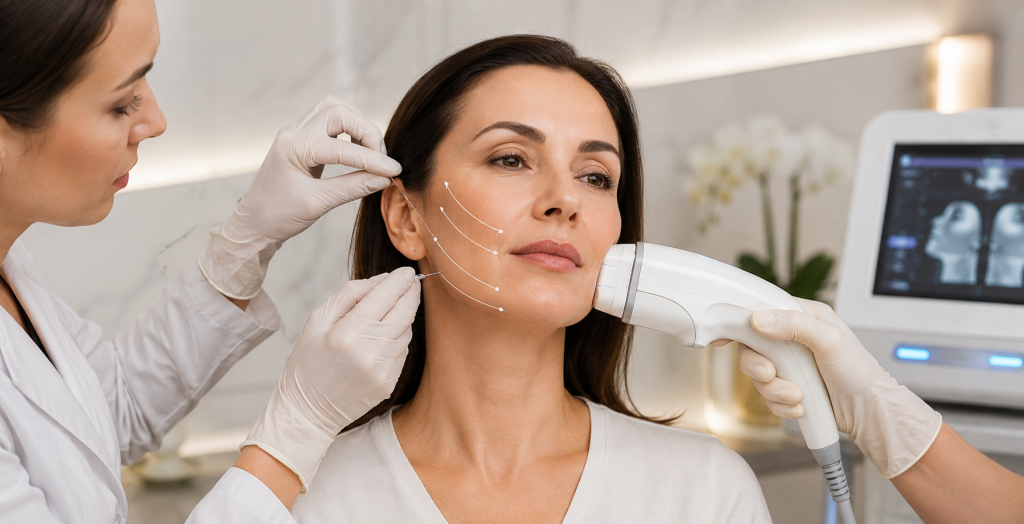
HIFU skin tightening uses focused ultrasound energy to heat targeted tissue beneath the surface. This heat may cause tissue contraction and support later collagen changes. Yet a HIFU facelift is not facelift surgery. It does not involve surgical cuts or the removal of extra skin.
The difference between PDO threads and HIFU starts with the method. Threads place support under the skin. HIFU sends energy into chosen tissue depths. Because devices vary, results cannot be judged solely by the term HIFU.
How Thread Support Changes Facial Shape
A thread lift uses absorbable, barbed sutures beneath the skin. The barbs can hold selected tissue and create mechanical support. Threads may help early jowls, mild cheek descent, brow laxity, or a softer lower face. However, they cannot remove a large amount of extra skin. Patients researching PDO threads in Wantagh, NY, can review the practice’s treatment process before booking. Looking Younger Aesthetics assesses the face at rest and during movement. The provider reviews comfort, timing, health history, and the areas causing concern.
The choice between a thread lift and HIFU should consider the desired change. Threads can change tissue position in selected areas. However, the result remains smaller than a surgical lift. Skin quality and tissue weight can affect the outcome.
How Focused Ultrasound Builds Firmness
Focused ultrasound works without the need to place sutures under the skin. A device sends sound energy toward selected tissue depths. The energy creates small heated points. These points may cause contraction and start a healing response. Therefore, the visible change often develops over time.
People seeking HIFU for sagging skin may expect loose tissue to move all at once. However, the method relies more on tissue response than direct support. A HIFU vs PDO threads comparison should separate gradual firmness from physical repositioning.
HIFU may suit selected people with mild or moderate laxity. Still, research shows that devices and treatment methods vary. Patient results vary as well. Therefore, the provider should explain the device, the treatment depth, the expected change, and the limits before care.
Match the Method to the Visible Concern
One treatment may fit the jawline, while another may fit skin firmness. The table below shows how the main goals differ.
| Concern | Thread support | Focused ultrasound |
| Early jowls | May hold selected loose tissue | May improve firmness over time |
| Soft jawline | May create earlier contour support | May create gradual tightening |
| Loose neck skin | May help selected mild laxity | May support a slow firming response |
| Heavy extra skin | Usually limited | Usually limited |
| Fast visible change | Support may appear earlier | Main change often needs more time |
The search for HIFU vs thread lift for jowls needs more than a yes-or-no answer. Jowls can involve skin, fat, bone shape, and lost volume. Likewise, HIFU vs thread lift for jawline care depends on tissue weight and facial structure. Neither method fixes every cause.
When Results Begin to Show
The pace of change can shape the decision. Threads may create support soon after placement. However, swelling can hide the true contour. HIFU changes often develop more slowly because the tissue response needs time.
PDO Threads Earlier Lift And Facial Contour
The opening result from threads may look uneven while swelling settles. ASPS notes that the final thread result becomes clearer after several weeks.
HIFU Gradual Skin Firming Over Time
The HIFU results timeline can vary by device, depth, and patient response. Published reviews describe gradual changes rather than one fixed result date.
Key timing factors include:
- The degree of tissue laxity
- The device or thread type
- The treated facial area
- The patient’s healing response
- Past facial treatments
Longevity Has No Simple Winner
People often ask how long does HIFU lasts. Others ask how long do PDO threads last. However, no single timeline applies to every patient. Tissue weight, skin quality, treatment depth, thread placement, age, and ongoing facial changes can affect longevity. Threads dissolve over time, while facial aging continues. HIFU results depend on the tissue response and the device used. Therefore, the longest result is not always the best result. A treatment must still match the main concern.
Patients should ask:
- When might the change become clear?
- How much improvement is realistic?
- Could maintenance be needed?
- Which habits may affect the result?
- When should the face be reviewed again?
These questions create a better plan than one broad promise.
Comfort and Recovery Affect Daily Plans
The HIFU vs thread lift recovery comparison involves different symptoms. Thread healing may include swelling, bruising, irritation, tightness, and discomfort. Entry points may need ointment, cold compresses, or other care. Focused ultrasound does not create thread entry points. However, patients may feel heat, tenderness, tingling, redness, or swelling. The exact response can change with the device and energy level.
Before treatment, patients should plan for:
- Work and public events
- Exercise and heavy lifting
- Facial pressure while sleeping
- Skin care during early healing
- A follow-up visit when needed
Neither option should be called free from recovery. Moreover, severe or unusual symptoms need prompt medical advice.
Price Should Follow the Treatment Plan
A HIFU vs thread lift cost comparison should cover more than the opening fee. Thread pricing may depend on the treated zones, placement plan, thread use, and follow-up. HIFU pricing may depend on the device, the facial area, the number of lines, and the planned sessions. The question can HIFU and PDO threads be combined requires the same care. A person may have weak skin support and tissue descent. However, more treatment does not always yield better results. A provider may prefer a staged plan.
Before agreeing to care, patients should confirm:
- The exact device or thread used
- The areas included in the fee
- The likely number of visits
- The recovery and follow-up plan
- The reason for each treatment
A clear quote should connect cost with a clear goal.
The Neck May Need Its Own Plan
The neck has thinner skin and different movement from the cheeks. Sun exposure and weight changes may also affect it. Therefore, a neck concern should not be treated as a small extension of the face. Patients exploring a non-surgical neck lift in Wantagh, NY, can discuss skin support, treatment comfort, recovery, and realistic limits. Looking Younger Aesthetics reviews the neck and nearby facial areas before recommending available care.
Therefore, patients should ask which exact method is offered. A stronger neck change may require a surgical opinion. Nonsurgical care usually creates a smaller result. This difference should be clear before any treatment begins.
Medical Review Should Come Before Device Choice
A useful consultation checks the concern before discussing a machine. The provider should assess tissue position, facial movement, skin quality, medical history, and past cosmetic care. Looking Younger Aesthetics may include energy treatments, injectables, or skin-strengthening care as part of a non-surgical facelift in Wantagh, NY. Patients should confirm the treatment name and device during booking.
Clinical review at the practice is led by Dr. Mahalia Previlus, an internist and medical director. Her role connects aesthetic planning with health screening and patient education. The treatment choice should still follow the principles of anatomy, safety, and realistic goals.
Choose the Method After Finding the Cause
The better treatment is the one that matches the cause of the change. Threads may support tissue that has moved lower. Focused ultrasound may create gradual firming through a tissue response. However, neither option replaces surgery for every patient.
Looking Younger Aesthetics helps patients review facial shape, skin quality, health history, timing, and goals. It does not currently identify HIFU as an offered device. To discuss available care, call 631-651-6203. The office is located at 3430 Sunrise Highway, Wantagh, NY 11793.
Frequently Asked Questions
Why can two ultrasound devices give different treatment plans?
Ultrasound systems can differ in treatment depth, imaging, energy delivery, and cleared uses. Therefore, the same general treatment name may not mean the same process. Patients should ask for the device name, planned depth, provider training, expected feeling, and the reason that the system fits their concern.
Can focused ultrasound be used after a past thread treatment?
Past threads may affect timing and treatment planning. The provider needs to know when the threads were placed and which areas were treated. Tissue healing, remaining support, skin condition, and future goals may shape the advice. Patients should not book energy care without sharing that history.
Which choice may suit someone with thin facial skin?
Thin skin can make thread edges, swelling, or tissue changes more visible. However, energy settings need to be handled with care as well. A provider should assess skin thickness, facial fat, tissue weight, and prior treatments. The safest choice may involve a lower treatment level or another type of care.
What matters when a patient has already received fillers?
Fillers can change facial shape and tissue support. Therefore, the provider should know the product, area, amount, and treatment date. Added energy or thread placement may affect nearby tissue. A full treatment history helps prevent poor placement and supports a more balanced plan.
How does facial asymmetry affect the treatment choice?
Most faces have some natural unevenness. However, tissue descent may be stronger on one side. A provider should assess both sides during rest and movement. The treatment plan may differ across the face. Patients should understand whether care may improve, reveal, or leave existing unevenness.
What should Wantagh patients bring to a consultation?
Patients should bring a medicine list, past procedure dates, product names, and clear treatment goals. Photos may help show older facial changes. They should mention upcoming events and recovery limits. Looking Younger Aesthetics can use this information to discuss available care and realistic timing.
Can Long Island patients plan treatment before a major event?
Yes, but the timing should leave room for swelling, tenderness, or delayed results. Threads may need several weeks to settle. Ultrasound changes may take longer to develop. Patients should avoid booking close to an important date. A consultation can create a safer schedule.